Timeless Logo Design and Systems Built for Enduring Brands
A logo is more than a symbol—it is the foundation of a brand’s visual language. We design logos and scalable logo systems rooted in strategy, meaning, and precision. From primary marks and symbols to responsive variations, typography, and usage frameworks, our approach ensures clarity, consistency, and adaptability across every touchpoint. Built for longevity, our logo systems strengthen recognition, protect brand integrity, and support confident growth across markets and platforms.
Brand Discovery & Logo Strategy
Every logo begins with insight. We study the brand’s vision, values, audience, industry landscape, and long-term ambitions. This strategic foundation ensures the logo is not decorative, but meaningful—anchored in purpose, relevance, and differentiation, and designed to remain effective as the brand evolves.
Primary Logo Design
The primary logo is the central identifier of the brand. We design marks that balance clarity, character, and memorability—ensuring instant recognition and emotional resonance. Each logo is crafted to function seamlessly across digital, print, environmental, and experiential brand applications, without losing integrity or impact.
Logo Variations & Responsive Systems
Modern brands require flexibility. We develop responsive logo systems including horizontal, vertical, stacked, and icon-only variations. These ensure consistent brand presence across devices, platforms, and scales—maintaining legibility, hierarchy, and visual strength from large-format branding to small digital interfaces.
Symbol & Logomark Development
Symbols carry meaning beyond language. We design standalone logomarks derived from the brand’s core identity, allowing the logo to function independently without typography. These symbols become powerful visual assets, ideal for social media, packaging, app icons, merchandise, and long-term brand recognition.
Typography & Letterform Design
Typography defines the voice of the brand. We curate or design custom type systems that complement the logo’s personality and ensure readability across mediums. Careful attention is given to spacing, proportions, and hierarchy, creating a cohesive visual rhythm that enhances brand clarity and professionalism.
Colour Strategy & Visual Harmony
Colour selection is both emotional and strategic. We define primary, secondary, and neutral palettes rooted in psychology, contrast, and accessibility. This ensures the logo and identity remain consistent, recognisable, and adaptable across digital screens, print materials, environments, and cultural contexts.
Grid, Geometry & Proportion Systems
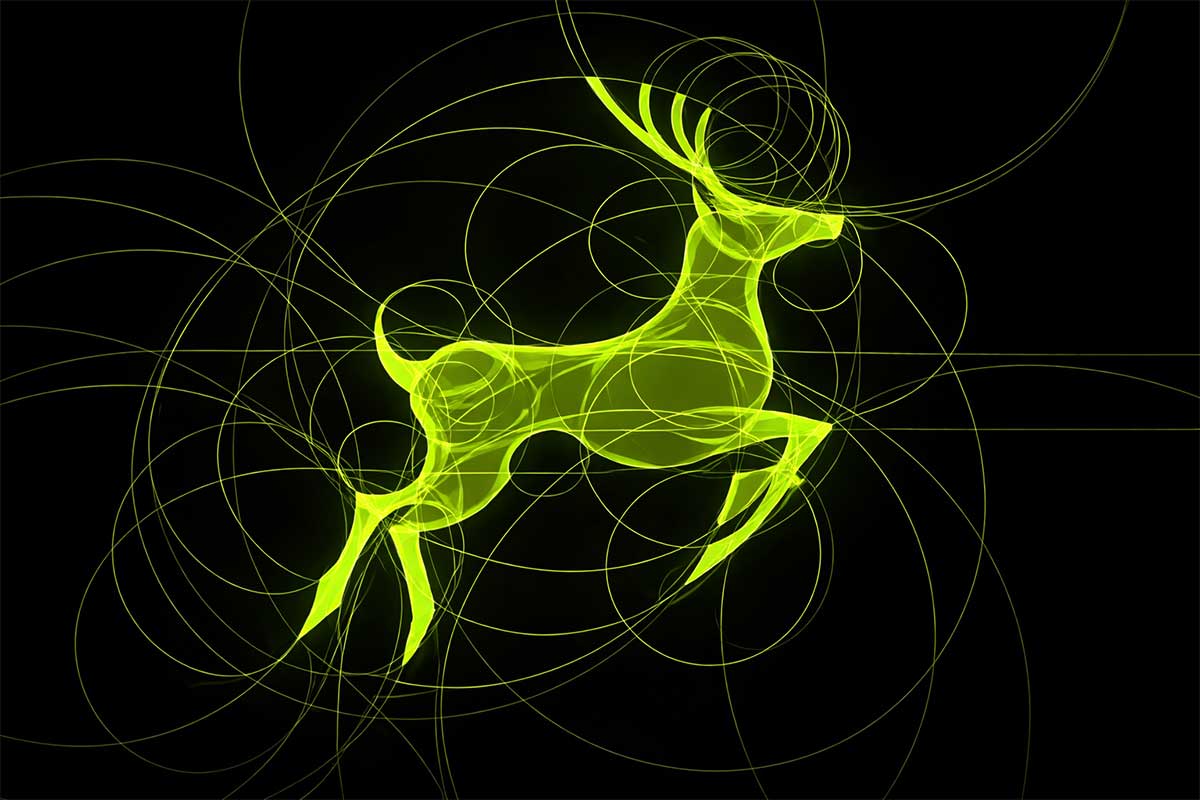
Precision creates timelessness. We build logos using structured grids and proportional systems that ensure balance, scalability, and consistency. This underlying geometry allows the logo to perform reliably across formats while preserving visual harmony, refinement, and professional execution in every application.
Usage Guidelines & Brand Governance
A logo’s value lies in consistent use. We provide detailed logo usage guidelines covering spacing, sizing, backgrounds, colour applications, and misuse scenarios. These systems empower internal teams and partners to maintain brand integrity, ensuring the logo remains clear, protected, and effective over time.
Final Asset Delivery & Documentation
We deliver comprehensive logo asset kits including print-ready, digital, and scalable formats. Accompanied by clear documentation, these assets ensure seamless implementation across teams, vendors, and markets—making the logo system easy to manage, apply, and evolve as the brand grows.
12 Different Types of Logos
Abstract Logos
Abstract logos are ideal for brands that want to communicate a modern, innovative, or conceptual identity. These logos rely on shapes, lines, and patterns rather than literal visuals, allowing brands to build recognition through design principles rather than direct representation.
Abstract logos use core design fundamentals and Gestalt principles such as similarity, proximity, continuity, and balance to create meaningful visual identities. Because they do not depict real-world objects, they offer flexibility and allow audiences to interpret the brand in multiple ways. This approach results in fresh, memorable, and scalable brand identities. Abstract logos often work best when paired with wordmarks. The wordmark adds clarity and context, while the abstract symbol enhances versatility across digital, print, and environmental applications.
Best used for
Abstract logos are well suited for industries that value innovation, strategy, and conceptual thinking:
Technology companies: benefit from abstract logos as they visually express progress, efficiency, and future-forward thinking.
Consulting firms: use abstract forms to convey logic, clarity, and strategic problem-solving.
Financial institutions: rely on abstract logos to communicate trust, stability, growth, and global presence.
Design studios: use abstract visuals to showcase creativity, imagination, and unconventional thinking.
Wellness brands: apply abstract forms to represent balance, harmony, calmness, and holistic well-being.
Line Drawing Logos
Line drawing logos focus on simplicity, elegance, and timeless appeal. They reduce brand identity to its most essential form using clean, minimalist strokes that are instantly recognizable.
These logos are highly scalable and perform consistently across platforms, from mobile screens to large-format signage. Line drawing logos generally appear in two formats: continuous line designs created with a single unbroken stroke, and multi-line compositions that maintain clarity through minimal detailing.
Best used for
Line drawing logos are ideal for brands that value refinement and restraint:
Technology brands: use line logos to express innovation, clarity, and digital-first thinking.
Fashion and lifestyle brands: benefit from the sophistication and timelessness of minimalist line art.
Creative agencies: use line-based logos to highlight artistic discipline, thoughtful design, and visual precision.
Monogram Logos
Monogram logos convert a brand’s initials into a strong visual signature. This classic logo style is widely used by luxury brands, fashion houses, and family-owned businesses due to its elegant and timeless nature.
Monograms can be minimal or intricate and may stand alone or combine with additional design elements such as custom typography, overlapping shapes, or decorative icons. They help brands establish a refined, recognizable, and long-lasting identity rooted in tradition and prestige.
Best used for
Monogram logos resonate with industries that emphasize heritage and exclusivity:
Luxury and fashion brands use monograms to symbolize sophistication and timeless appeal.
Family businesses rely on monograms to reflect legacy, trust, and continuity.
Boutique hotels and spas use monograms to convey exclusivity and personalized service.
Fine dining restaurants apply monograms to represent culinary excellence and tradition.
Art and design studios use monograms to showcase individuality and creative identity.
Letterform Logos
Letterform logos focus on the visual structure of individual letters, transforming them into unique brand symbols. Unlike monograms, letterform logos often use full brand names or key characters, allowing for more typographic creativity.
These logos balance readability and symbolism, functioning as both text and icon. Letterform logos are ideal for brands that want to appear modern, expressive, and distinctive while maintaining strong brand recognition.
Best used for
Letterform logos work across multiple industries:
Technology startups use bold letterforms to build quick recognition in competitive markets.
Creative agencies leverage typographic expression to highlight design expertise.
Media and entertainment brands use letterforms to create iconic and culturally relevant identities.
Food and beverage brands use expressive letters to convey taste, quality, and personality.
Fashion and lifestyle brands apply letterforms to project individuality and trend-driven appeal.
Wordmark Logos
Wordmark logos, also known as logotypes, place the brand name at the center of the visual identity. Through custom typography, spacing, and subtle design elements, the brand name itself becomes the logo.
Wordmarks are highly versatile and work seamlessly across digital and print platforms. Many brands enhance their wordmarks with icons or symbols to create complete visual systems while maintaining clarity and memorability.
Best used for
Wordmark logos suit a wide range of industries:
Technology companies use wordmarks to appear modern and trustworthy.
Professional services rely on wordmarks to communicate credibility and expertise.
E-commerce and retail brands use wordmarks for instant recognition and customer loyalty.
Media and publishing companies reflect brand personality through typography.
Nonprofit organizations use wordmarks to reinforce mission-driven communication.
Pictorial Mark Logos
Pictorial mark logos simplify brand identity into a single visual symbol. These logos are instantly recognizable and function without text, making them powerful tools for global branding.
A strong pictorial mark is visually distinctive, emotionally resonant, and scalable across all platforms. The design must remain simple while carrying enough meaning to represent the brand independently.
Best used for
Pictorial mark logos are effective for brands seeking strong visual recall:
Technology companies use symbols to represent innovation and abstract concepts.
Food and beverage brands visually express products or ingredients.
Nonprofit organizations use symbols to communicate missions and values.
Retail brands rely on pictorial marks for quick recognition and memorability.
Combination Mark Logos
Combination mark logos integrate a wordmark with a visual symbol. This approach provides both immediate recognition and brand clarity, making it one of the most versatile logo types.
The symbol and text may appear together or separately depending on usage, allowing flexibility across platforms while maintaining brand consistency.
Best used for
Combination mark logos are suitable for many industries:
Technology brands use them to balance innovation and clarity.
Food and beverage brands highlight product attributes visually while reinforcing brand name.
Nonprofit organizations communicate mission through symbols supported by text.
Retail brands benefit from strong symbol-text relationships across digital and physical spaces.
Emblem Logos
Emblem logos feature text and symbols enclosed within a defined shape or frame. Inspired by crests, badges, and heraldic designs, they convey tradition, authority, and quality.
These logos are highly detailed and timeless, often associated with heritage and prestige.
Best used for
Emblem logos are ideal for:
Luxury brands seeking exclusivity and refinement.
Educational institutions representing history and academic excellence.
Heritage brands emphasizing legacy and trust.
Financial institutions communicating stability and security.
Clubs and organizations representing shared identity and values.
Mascot Logos
Mascot logos use characters to represent brands, making them engaging, friendly, and emotionally appealing. Mascots can be animated or static and often develop their own personality and storytelling potential.
They are particularly effective for creating strong audience connections and brand recall.
Best used for
Mascot logos work well for:
Food and beverage brands seeking playful and approachable identities.
Children’s products and services engaging young audiences and families.
Sports teams fostering team spirit and fan loyalty.
Technology and gaming brands humanizing complex products.
3D Logos
3D logos add depth and realism using modeling and rendering techniques. They convey innovation, luxury, and futuristic appeal.
Best used for
3D logos are suitable for:
Technology and gaming industries
Architecture and construction firms
Automotive and transportation brands
Luxury brands
Creative agencies
Dynamic Logos
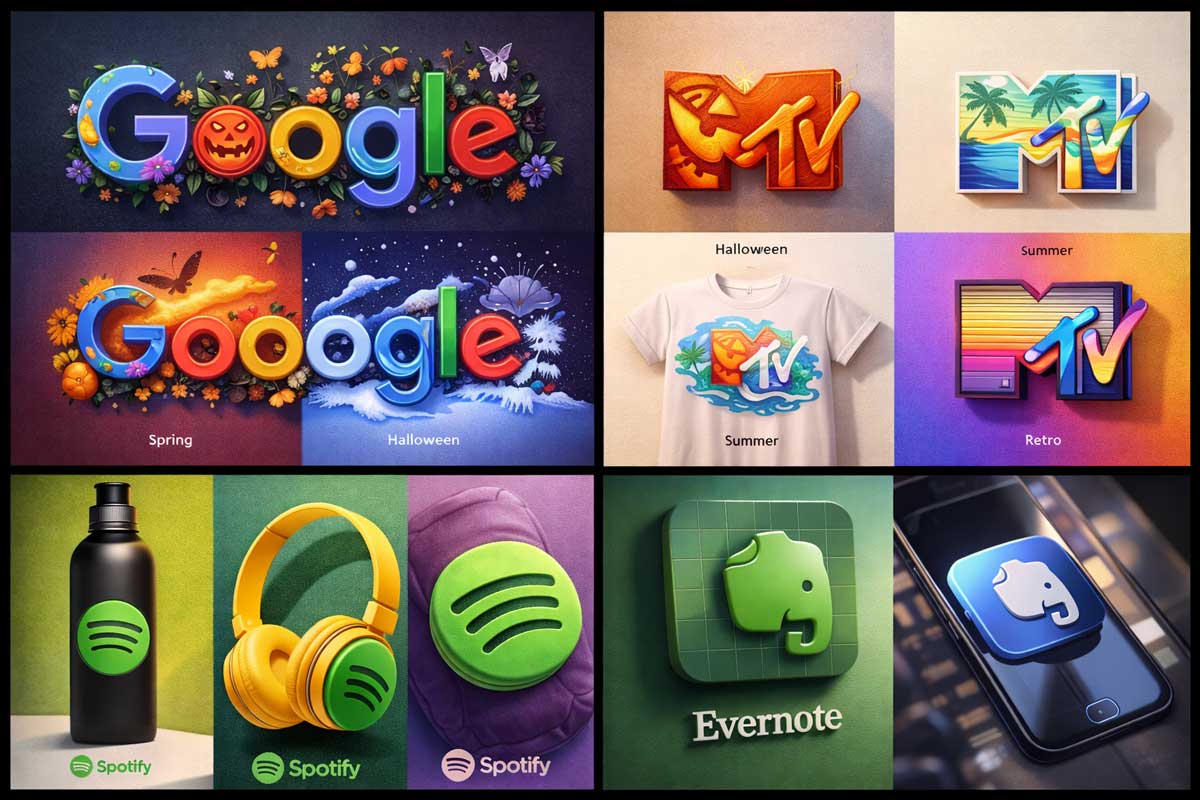
Dynamic logos adapt across platforms, seasons, and user interactions while maintaining core identity. This flexibility keeps brands relevant in fast-changing digital environments.
Best used for
Dynamic logos are effective for:
Technology startups
Media and entertainment brands
E-commerce platforms
Social media brands
Marketing and advertising agencies
Animated Logos
Animated logos bring motion to brand identity, transforming static designs into dynamic digital experiences. Subtle or complex animations enhance engagement, storytelling, and memorability.
Best used for
Animated logos are ideal for:
Technology and startups showcasing innovation.
Media and entertainment brands creating immersive brand moments.
Gaming companies building excitement and energy.
E-commerce brands enhancing digital interaction.
Marketing agencies demonstrating creativity and modern thinking.











 +91 9890181399